The Succulent Source · Small plants, remarkable details
Lithops, mesembs & mimicry succulents.
Soft succulent · Protect from frostGrow frost-free. Shelter before freezing weather and avoid cold, wet roots; small pots need extra winter protection.
Living stones, split rocks, and other unusual succulents—choose your plant, then follow its rhythm.
What you’re ordering: Unless an option specifically names a pack, quantity one means one container. The 2-, 2.5-, and 3.5-inch sizes refer to container width, not plant width. Choose Lithops, a named alternative, an assortment, or an exact option using the selector; not every option is a Lithops.
LightVery bright; introduce sun gradually
WaterFor Lithops, leaf stage comes first
SoilGritty mix with rapid drainage
Cold hardinessSoft succulents · Protect from frost
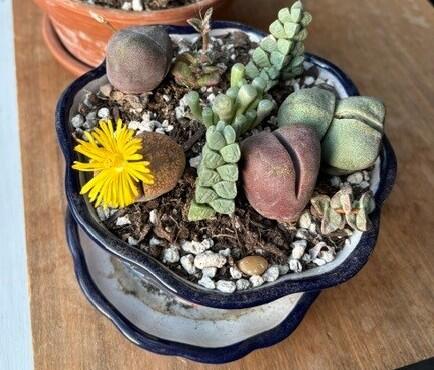
Listing photo. Choose the plant and container option in the selector; standard assortments vary.
A closer look
A small plant with its own rhythm.
Stone-like bodies, patterned leaf windows, and surprising flowers make these small succulents fascinating to watch. Lithops replace their paired leaves from within, reusing moisture stored in the older pair. This listing also offers other plants with different watering needs, so choose your option first and match care to that plant.
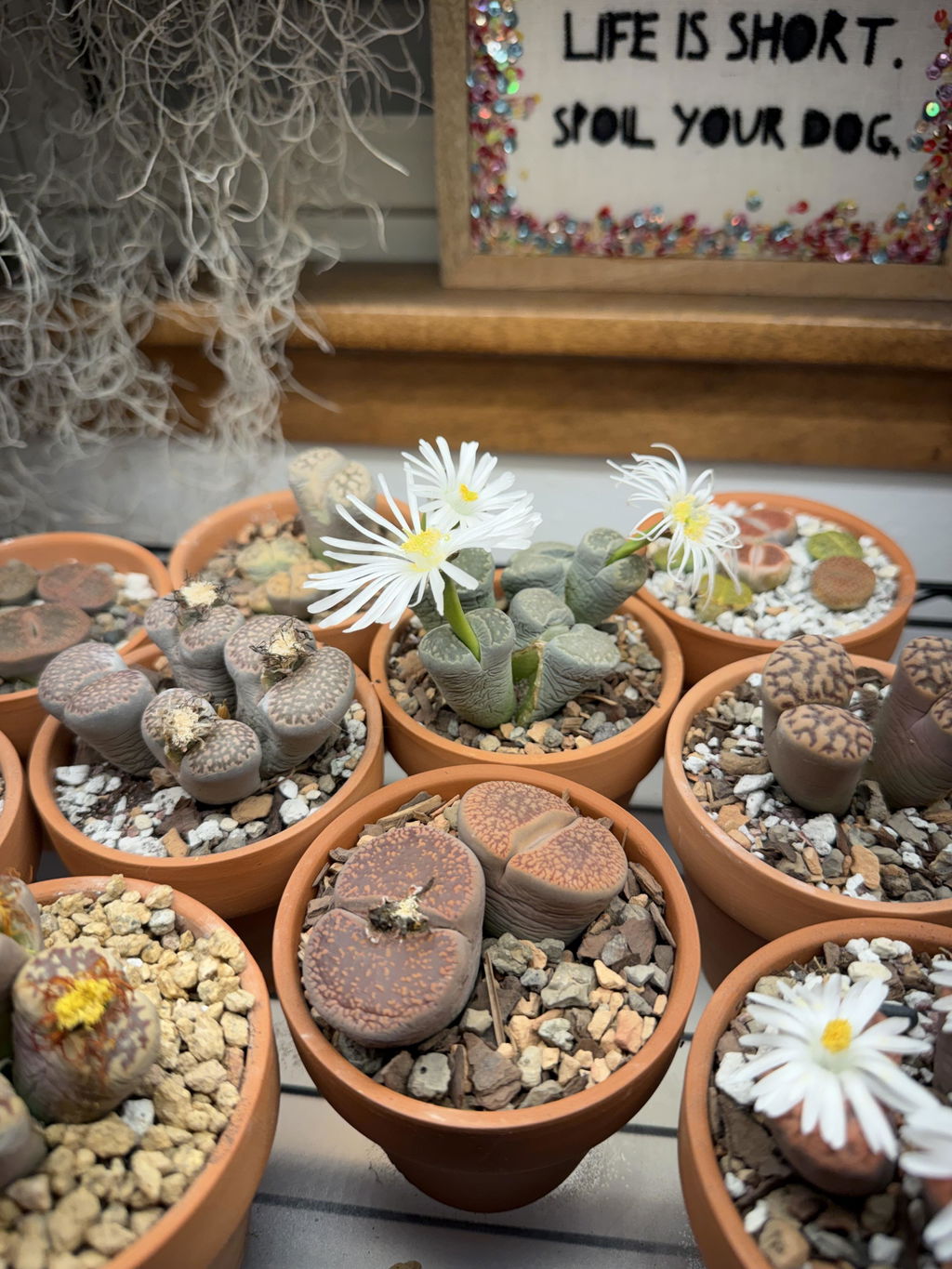
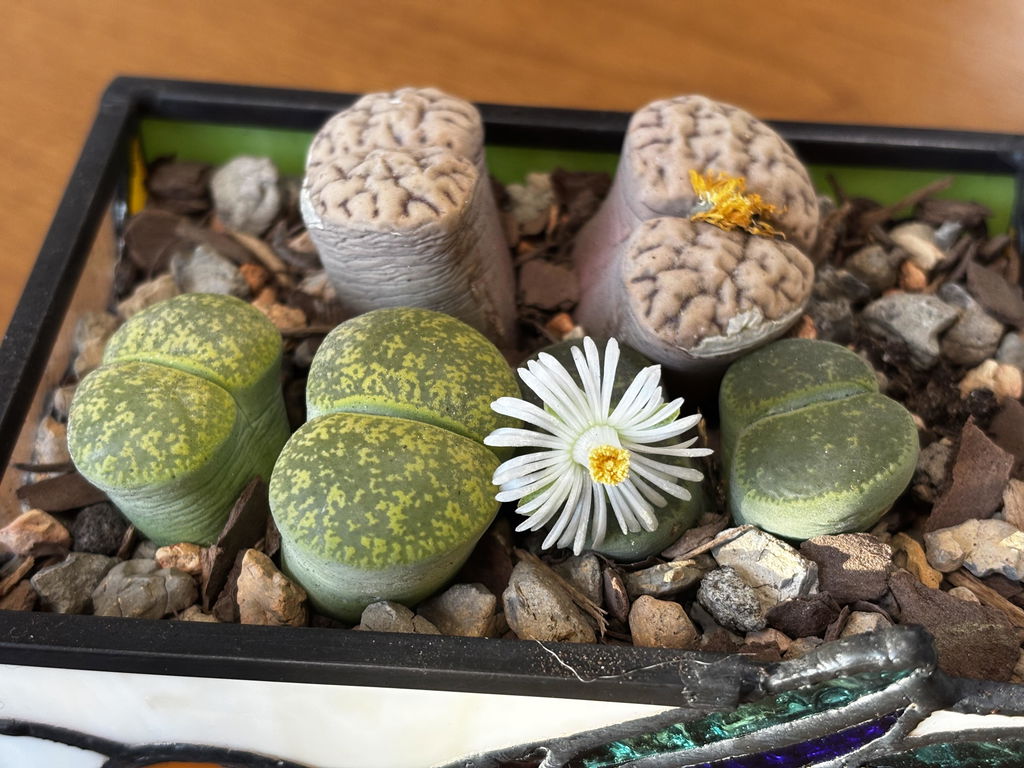
Most Lithops are brown, gray, or muted earth tones, often patterned to resemble stones. Brighter colors are less common and are not guaranteed in a standard assortment. Leaf markings, body size, and the number of heads vary.
Lithops care
Water by the leaf cycle.
Splitting Lithops? Keep them dry. New leaves should absorb the old pair before you resume watering. This rule is for Lithops; the other options below need their own care.
01 · Old leaves feeding new leaves
When a new pair emerges through the split, the older pair supplies stored moisture. Do not water Lithops during this replacement stage. Let the old leaves become thin and papery; do not pull them off while still fleshy.
02 · After the old pair is spent
Once the old leaves are dry and the plant is growing, water carefully only when appropriate, then let the mix dry fully. A dry pot alone does not prove that a Lithops needs water. Consider leaf firmness, temperature, and root health together.
03 · Hot rest and slow growth
Lithops can slow during hot weather. Reduce or withhold water during rest rather than pushing growth. Do not use a fixed weekly schedule, and do not assume every species or growing space follows identical calendar dates.
04 · Flowers and the next cycle
Established plants may flower in their active season. As a new leaf cycle develops, adjust again. Observe the actual leaves; “water twice a year” and “water every week” are both poor universal rules for a mixed collection.
Choose first, then care
Not every option is a Lithops.
Lithops · living stones
Follow the leaf-replacement guide above. Keep separate from plants that need more frequent watering so a shared pot does not force the same routine on both.
Pleiospilos · split rocks / Royal Flush
Paired leaves also replace older growth, but Pleiospilos nelii is a different plant from Lithops. Use very sharp drainage and sparse watering guided by growth and leaf condition. Persistent stacked old leaves can suggest excess water; do not copy a Lithops calendar blindly.
Faucaria · tiger jaws, including variegated options
These are toothed rosette succulents rather than paired living stones. Water appropriately during growth, let the mix dry, and reduce water during rest. Do not impose the long dry leaf-replacement period used for Lithops.
Fenestraria · Baby Toes
Window-tipped leaves are fragile and can break during shipping or handling. Give bright light, rapid drainage, and careful watering during active growth. Do not squeeze the leaf tips to test thirst.
Anacampseros and other assorted options
Small rosette plants have their own growth patterns and generally need a wet-then-dry routine when growing. They do not renew one pair of stone-like leaves in the Lithops manner. Follow the label supplied with the selected plant.
The growing setup
Light, roots & a protected spot.
Light without a sudden scorch
Use a very bright window or suitable grow light. Acclimate gradually to direct sun, particularly after shipping. Strong sun through hot glass can scorch tissue; stretching indicates that more usable light may be needed.
Air around the roots
Use a very gritty, free-draining mix in a pot with drainage holes. Allow depth for the roots, including the relatively long root system of living stones and split rocks. Avoid a shallow decorative dish that traps moisture.
Winter protection
These are soft succulents for frost-free growing. Protect from freezing weather and cold drafts. Cool conditions and short days generally reduce water use; follow the actual plant’s leaf stage and growth.
Pests and unhealthy tissue
Inspect for mealybugs and mites; isolate a suspect plant before treatment. A dry old leaf being absorbed is normal. Spreading softness, translucence, or a collapsing base can indicate rot and should not be treated with more water.
Start here
Unpack, reseat & let the roots settle.
Shipping can shift soil or loosen small plants. Gently remove packing and reseat them without burying their tops. Handle Baby Toes with extra care. Do not water simply because the box has arrived or because loose soil looks dry.
Our nursery’s replanting guidance is to keep newly replanted or transplanted plants dry for about three weeks. That is a settling period, not an instruction to water automatically on day 21. For Lithops, continue withholding water if the old leaves are still being absorbed. Keep the plants in bright protected light while they settle.
Minor surface marks and splitting can be part of normal growth, but not every blemish is harmless. Photograph anything concerning and contact us. Keep an arriving assortment separate from established plants while you inspect it.
A few useful answers
Before you choose your mix.
How many Lithops will be in a container?
A standard 2.5-inch Lithops container commonly has two to four bodies, but it can have one larger plant instead. Counts and sizes vary. Smaller square pots may sometimes be used. Unless a pack option says otherwise, quantity one is one container, not one plant of every type pictured.
Can I choose a color or the exact plants?
Standard photos are examples, and most Lithops are muted brown or gray. Email before ordering if a particular palette matters. An option explicitly sold as exact refers to the pictured container or set; an assortment does not guarantee the photographed individuals.
Will the plants multiply?
Lithops grow slowly. Over time, one head may divide into more than one, and seed is another propagation method. They do not spread on runners. Avoid dividing small plants or disturbing roots simply to increase the count.
Is decorative gravel included?
Fine gravel may or may not be present in a shipment, so do not assume it is included. Choose any top dressing for appearance and drainage, and keep it from hiding a persistently damp base.
A few ordering details.
Unless an option specifically names a pack, quantity one means one container. The 2-, 2.5-, and 3.5-inch sizes refer to container width, not plant width. Choose Lithops, a named alternative, an assortment, or an exact option using the selector; not every option is a Lithops.
For a three- or five-plant mesemb mix, the selected pack option determines the quantity. Assorted mesemb packs come labeled. They may include different types with different care needs, so avoid keeping them on a single watering schedule just because they arrived together.
Baby Toes are particularly fragile. If an assortment can include them and you prefer not to receive them, leave a checkout note requesting that they be omitted where the assortment allows. That request does not change an individually selected Baby Toes option. Broken tips are possible despite careful packing.
Read the option name, size, and current photos before adding to cart. Plant form, color, head count, and seasonal leaf stage vary. Flowers are not guaranteed. This listing’s growing notes apply to ornamental plants, with the specific type determining the routine.
We take great care in the packaging of your plants, but unfortunately the same cannot always be said in how they are handled once they leave us. If you are unhappy with your order for whatever reason, please contact us within 24 hours and we will do our best to make the situation right. If possible, please take a few pictures and email them to us as it will help us figure out the best way to resolve any problem. We value our customers and want you to be happy with your purchase! Please be nice when emailing or calling us, and we’ll be nice back!
I bought two pots and received a total of six Lithops. They arrived in great shape—one even bloomed while in transit! After planting them, two more started getting ready to flower as well. They are super healthy and doing wonderfully. Very satisfied with this purchase!
T
Tania M.
Lovely Lithops
I have bought several Lithops from The Succulent Source over the past year and they have all survived! I bought some smaller ones from a different source and I am sure I overwatered them and they died. Then I found The Succulent Source and the care instructions that is provided with each order is so helpful! I have been following the instructions and so far all are doing so well and they have flowered!
B
Barbara M.
So excited
For having bought a "grab bag" of the leftovers these plants were in great shape. They have all been repotted and are living up to the quality I know succulent source provides. Couldn't be happier and I've already ordered more from them.
E
Erin B.
Awesome Lithops
Great place to buy quality Lithops! This is my third purchase, now just wait until the weather warms up and order again!
We take the stress out of Weddings, Showers, & Events with our: Excellent Customer Service, Safe Shipping, and Beautiful Succulent Favors.
You may also like
Recently viewed
Safe Delivery
We pack your plants safe and tight to ensure they arrive healthy.
Customers Love us
With over 13,000 reviews, you can be sure you'll be happy too.
Top-notch support
Have an issue? Let us know right away and we'll make it right.
We're Experts
We've been selling succulents and cactus online for 15+ years.
Well packed - arrived intact and in great condition
Well packed - arrived intact and in great condition.
So far so good, it doesnt seem to have any issues from the shipping even with a slight cold snap at the time.
Already seems to be growing well just a few weeks in. Great Price considering my lack of local options.
I bought two pots and received a total of six Lithops. They arrived in great shape—one even bloomed while in transit! After planting them, two more started getting ready to flower as well. They are super healthy and doing wonderfully. Very satisfied with this purchase!
So glad I made this purchase. Have shopped with Succulent Source on a few purchases …. Never disappointed in the incredible packaging, fast shipping, and great quality plant. I won’t shop anywhere else now for my cactus needs.