Hardy in mild winters · About 23°FLimited cold tolerance to about 23°F (-5°C) in a sheltered site with very sharp drainage. Protect small pots and prolonged freezes.
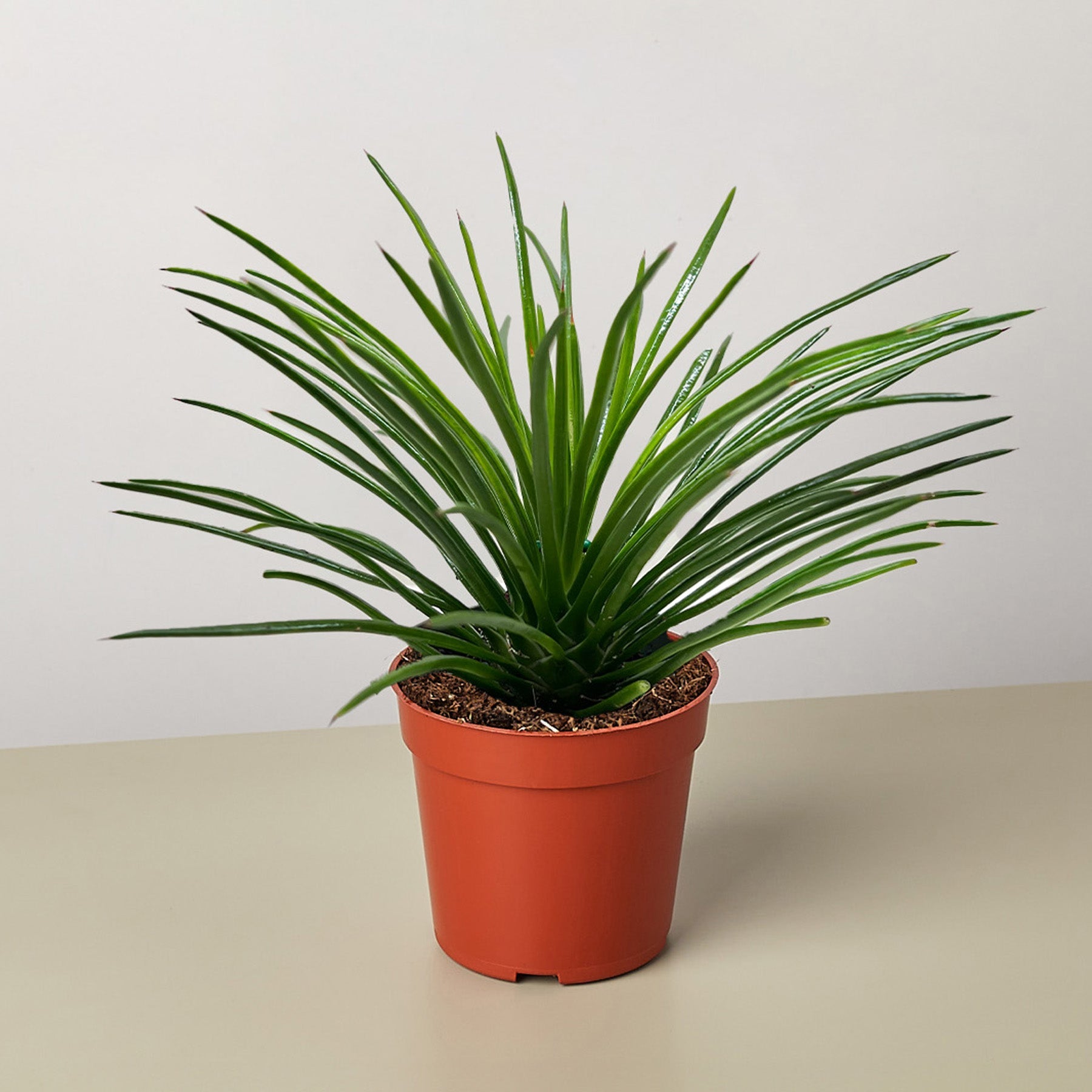
Agave geminiflora makes a rounded rosette of many narrow leaves with thread-like fibers.
What you’re ordering: Choose the size or container option shown in this listing. This is Agave geminiflora, the Twin Flower Agave. Photos are representative, and a mature flower stalk is not included as a guarantee.
LightBright sun or filtered sun; acclimate
WaterLet established roots dry between drinks
SoilOpen, free-draining mix; drainage holes
Cold hardinessHardy in mild winters · About 23°F
Photo from this listing. See ordering details for exact specimens, assortments, and natural variation.
A closer look
Form, texture & room to grow.
Agave geminiflora makes a rounded rosette of many narrow leaves with thread-like fibers. Its name refers to flowers arranged in pairs on a much taller stalk when mature. The foliage is the everyday feature; a young container plant is not expected to flower on arrival.
Agaves are valued for their rosette structure. Many eventually send up a tall flower stalk and that flowering rosette then dies, while any established offsets can continue. Some species remain solitary. “Century plant” does not mean a guaranteed hundred-year wait, and flowering is not expected with a nursery start.
The everyday essentials
How to keep it growing.
01 · Find the right light
Begin with bright protected light, then increase sun gradually. Many Agaves enjoy sun, while variegated leaves and some selections benefit from filtered light or afternoon protection in hot climates. Follow the needs of the named plant rather than assuming every Agave wants desert heat against a wall.
02 · Check before watering
After establishment, let the root mix dry between thorough waterings. Water the soil and allow it to drain freely. Drought tolerance does not mean newly planted roots never need water, and a plant resting in cool weather needs less than one actively growing in warmth.
03 · Give roots air and drainage
Choose a free-draining cactus and succulent mix in a container with drainage holes. The mix should hold enough moisture for roots without remaining soggy. Keep the crown at its existing depth and use a container only modestly larger than the root ball.
04 · Adjust through the year
Reduce watering as growth and light slow, and protect the crown and roots from prolonged winter wet. Outdoor suitability depends on the actual species or cultivar. Even a cold-tolerant Agave is more vulnerable in a small exposed pot than when established in sharply drained ground.
Open and handle with care. Use protective gloves and suitable tools; Agave tips and edges can be sharp, and sap may irritate skin. Display it where leaves will not project into paths or catch children or pets. Move the pot rather than grasping the rosette.
Start here
The first few days at home.
Open the box carefully using protective gloves. Lift by the container or support the root ball, keeping fingers clear of sharp tips. Start in bright protected light, inspect the plant, and allow it to adjust before increasing sun or repotting. Check the mix before watering.
Small dry marks, older leaf tips, or spine imperfections can occur on living nursery plants. They do not become perfect again on the same tissue; later healthy growth changes the overall appearance. If you see progressive softening, a collapsed base, or another concern on arrival, take clear photos and contact us.
Know what you’re seeing
Pests & common growing questions.
Cottony clusters or shell-like bumps?
Check leaf bases and undersides for mealybugs or scale. Isolate an affected plant and identify the insect before choosing a treatment. Follow the label and keep sprays away from intense sun.
Sudden wilting or a collapsing crown?
Inspect for wet-root damage and, where present, agave snout weevil. Unexplained collapse is different from an old bent tip. Separate the plant and seek local extension advice if you find boring damage or larvae.
Inspect before treating.
Check leaf bases and undersides for mealybugs or scale. On Aloes, distorted clustered growth can also warrant checking for Aloe mite. Isolate affected plants and identify the cause before treatment; repeated watering will not solve an insect or mite problem.
Old marks or an active problem?
Dry, stable surface marks differ from spreading discoloration, soft tissue, or a collapsing growing point. Check light, moisture, roots, and pests together. Keep a newly arrived plant separate while you learn its condition.
Beyond the rosette
A little Agave background.
Agaves are succulent rosette plants associated with the Americas. Their strong shapes and water-storing leaves make them useful container accents and dry-garden plants where climate permits. Mature size varies widely, so a young nursery plant should be chosen with its future space in mind.
Agaves have a long history of fiber and other uses; sisal is produced from a particular Agave species. That background does not mean every ornamental Agave has the same uses. For this listing, choose the plant for its growing habit and decorative form. Flowering, offset production, and cold tolerance depend on the actual selection.
A few useful answers
Before you choose your spot.
Does it need a larger pot right away?
Let a healthy plant adjust first. When repotting is needed, choose a stable container with drainage and only a modest increase in size. Large volumes of damp mix around a small root system make moisture harder to manage.
How can I grow more?
Many Agaves can be increased from a complete offset with its growing point intact. Let any cut seal before potting into a free-draining mix. Timing varies, and not every species produces pups. A snapped leaf or spine does not normally root into a new Agave.
Will I receive the exact plant pictured?
Check the ordering details below. Standard nursery selections and assortments use representative photos. An exact-specimen listing refers to the specimen offered, but living plants keep growing and leaf colors can change between photography and shipping.
A few ordering details.
Choose the size or container option shown in this listing. This is Agave geminiflora, the Twin Flower Agave. Photos are representative, and a mature flower stalk is not included as a guarantee.
Container measurements describe the pot rather than a guaranteed plant diameter or mature height. Please review every option and photo before ordering. Natural variation in color, size, and form is expected. Older tips and leaves can carry dry marks or small breaks; review the photos and the condition described for this listing.
Great selection of cacti and very friendly company
Great selection of cacti and very friendly company. I asked for a specific short spined variation of what I wanted and they went out of their way to select one for me and even sent me a text letting me know they picked one out for me. Even through in a freebie! 5/5 stars